
shell
ผู้เยี่ยมชม
benducket3211@gmail.com
Can Interactive Classroom Technology Create More Engaging and Effective Learning Environments? (19987 อ่าน)
3 ส.ค. 2569 00:49
Education is changing rapidly as schools, colleges, universities, and training centers adopt new digital tools to improve teaching and learning. Traditional classrooms that once depended mainly on textbooks, whiteboards, and printed worksheets are increasingly being supported by smart displays, interactive panels, digital content, educational software, and connected devices. This transformation has made interactive classroom technology an important part of modern education.
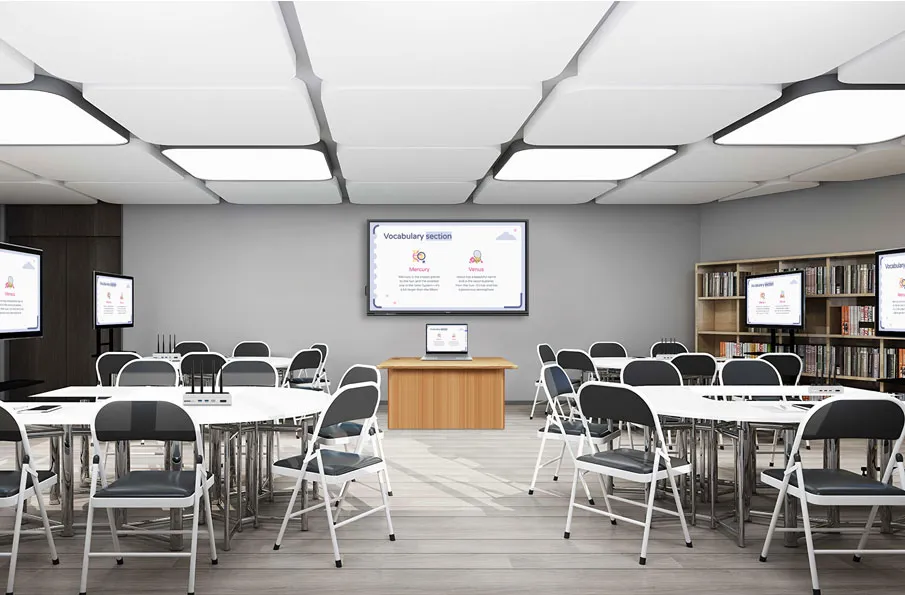
Interactive classroom technology combines digital displays, touch-enabled devices, multimedia resources, collaboration tools, and educational applications to create a more engaging learning environment. Instead of simply watching a teacher write information on a traditional board, students can interact with lessons, explore visual content, participate in activities, and collaborate with classmates through digital platforms.
The growing use of interactive learning technology reflects the increasing demand for flexible and technology-supported education. Teachers can use digital resources to explain difficult concepts through images, videos, animations, diagrams, and interactive activities. Students can also participate more actively instead of simply listening to lectures.
As schools continue investing in smart classrooms, understanding the role of interactive technology can help educators create learning spaces that are more collaborative, accessible, and adaptable to different teaching styles.
Interactive Classroom Technology and Digital Learning
The foundation of interactive classroom technology is the ability to combine teaching content with digital interaction. Modern classrooms may use interactive flat panels, smart boards, touchscreens, classroom displays, tablets, laptops, wireless presentation systems, and educational software to deliver lessons in more dynamic ways.
An interactive display can become a central part of a smart classroom. Teachers can display presentations, websites, educational videos, diagrams, digital textbooks, and other learning materials on a large touchscreen. Instead of using the display only for viewing, educators can interact directly with content by writing notes, moving objects, highlighting information, or demonstrating concepts.
This type of interactive learning environment can make lessons more visually engaging. For example, a science teacher can use animations to demonstrate a complex process, while a mathematics teacher can use digital diagrams and interactive graphs to explain difficult concepts. History lessons can incorporate maps, photographs, timelines, and multimedia resources to provide additional context.
Interactive technology can also support different learning preferences. Some students understand concepts more easily through visual demonstrations, while others benefit from hands-on interaction or multimedia explanations. Digital classroom tools can provide teachers with more options for presenting the same concept in different formats.
Another important element is digital classroom technology. Connected devices can allow teachers and students to access online educational resources, digital assignments, collaboration platforms, and cloud-based content. This can make learning materials easier to organize and access both inside and outside the classroom.
The use of technology does not necessarily replace traditional teaching methods. Instead, it can complement established educational practices by giving teachers additional resources for explaining concepts and engaging students.
Interactive Classroom Technology for Student Engagement
Student engagement is one of the most important goals of modern education, and interactive classroom technology can contribute to a more participatory learning experience. Instead of making students passive viewers, interactive tools can encourage them to respond, collaborate, explore, and contribute during lessons.
Interactive screens can support classroom activities where students answer questions, solve problems, annotate content, or participate in digital exercises. When students are able to interact directly with lesson material, the classroom can become more active and collaborative.
Teachers can also incorporate multimedia into lessons to maintain attention and provide context. Educational videos, animations, diagrams, simulations, and digital presentations can make abstract ideas easier to understand. When combined with discussion and teacher guidance, these resources can create a richer learning experience.
Interactive teaching tools can also support group activities. Several students may work together on a digital task, discuss a problem, and present their findings to the class. This encourages communication and teamwork while helping students develop skills that are useful beyond the classroom.
Wireless screen sharing can further improve collaboration. A student may be able to share a presentation or project from a laptop or tablet onto the classroom display, allowing the entire class to review it together. Teachers can then provide feedback or encourage classmates to discuss the work.
Interactive classroom technology can also make lessons more adaptable. A teacher can move between different types of content without needing to change physical materials. A single lesson might include a presentation, a video, a website, a digital worksheet, and an interactive activity.
This flexibility can help teachers respond to student questions and adjust lessons when necessary. If a concept requires additional explanation, an educator can quickly introduce another visual resource or interactive example.
Smart Classroom Tools and Modern Education
The growth of smart classroom technology has created learning environments where multiple digital tools work together. Interactive displays can connect with computers, tablets, wireless presentation systems, cameras, microphones, and online learning platforms. This connected environment can make it easier to manage lessons and communicate information.
Interactive flat panels are becoming particularly valuable in modern classrooms because they combine large displays with touchscreen functionality. Teachers can use them for writing, presentations, digital annotation, multimedia content, and collaborative activities.
Another important area is classroom collaboration technology. Digital platforms can allow students to work together on shared documents, presentations, projects, and assignments. These tools can support both classroom learning and remote participation when students cannot physically attend a lesson.
Educational technology can also support hybrid learning environments. A teacher may conduct a lesson for students in the classroom while remote students participate through video conferencing. Interactive displays and digital collaboration platforms can help connect these two groups.
Technology can also improve access to educational resources. Instead of relying only on printed materials, educators can use online libraries, digital textbooks, educational websites, multimedia resources, and specialized learning applications. This can give teachers more options when preparing lessons.
However, successful technology adoption requires more than simply installing digital equipment. Teachers need appropriate training and sufficient technical support. Schools should also consider network reliability, device compatibility, data privacy, maintenance, and long-term costs.
A classroom filled with advanced technology will not automatically produce better educational outcomes. The real value comes from using technology thoughtfully to support educational objectives. Teachers remain central to the learning process, while digital tools provide additional ways to explain, demonstrate, and explore information.
Future of Interactive Classroom Technology?
The future of interactive classroom technology is closely connected with the broader development of digital education. As interactive displays, cloud platforms, educational applications, artificial intelligence tools, and connected devices continue evolving, classrooms may become even more personalized and collaborative.
Future smart classrooms may provide teachers with more sophisticated ways to monitor participation, organize digital content, and adapt lessons. Students may have access to increasingly immersive educational experiences through simulations, interactive visualizations, virtual environments, and other digital resources.
Artificial intelligence may also influence educational technology by supporting personalized learning experiences and helping educators organize instructional material. However, technology should continue to be used as a supporting resource rather than a replacement for meaningful teacher-student interaction.
The long-term success of interactive learning technology will depend on thoughtful implementation. Schools need reliable infrastructure, teacher training, appropriate software, and clear educational goals. When these elements work together, technology can become a valuable part of a modern learning environment.
Conclusion
Interactive classroom technology is transforming traditional learning spaces by giving teachers and students new ways to communicate, collaborate, and interact with educational content. Interactive displays, smart boards, digital learning platforms, wireless presentation systems, tablets, and educational applications can make lessons more flexible and engaging.
The greatest advantage of interactive technology is not simply the presence of advanced equipment. Its real value comes from using digital tools to support meaningful teaching and active learning. Teachers can combine multimedia resources, interactive activities, digital collaboration, and traditional instructional methods to create balanced educational experiences.
43.242.176.21
shell
ผู้เยี่ยมชม
benducket3211@gmail.com